Notetaking
(The following practical guide is based on a meta-analysis of research from the TES 15 Nov 2019, entitled Research Review; “Take note: students need help writing stuff down” by John Dunlosky, Steven T Peverly)
Purpose:
To absorb visual and/or spoken information (dual-coded), to try to retain and connect knowledge and build understanding so that you are able to quickly summarise and record your understanding. Also to record new information that you don’t yet understand and cannot connect to previous learning.
Teacher Assistance:
Rather than give you a script or transcript of a presentation a teacher will provide you with a scaffolding on which you can build your notes and then guide you through the content in a (hopefully) interesting way. The scaffold will possibly a series of headings and sub-headings, or possibly a mindmap with the first layer of branches done for you. This is the first level in your own Basic Information Ordering System (BIOS) for the subject studied.
The teacher will also want to alert you to vital information by saying: “This is important!” or “The following will form the basis of your assessment” or something similar- please pay attention at this point!
Review:
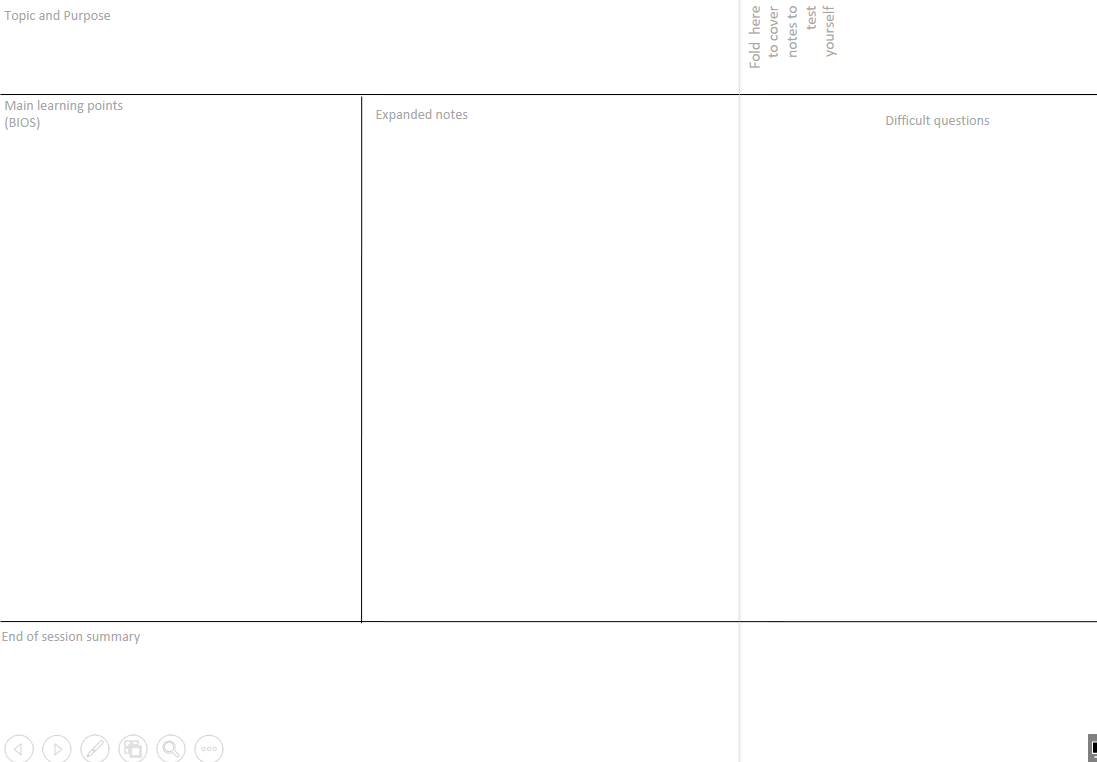
Very little is learnt and retained in your first learning episode, and a method or system of note- taking that is designed to enable you to review your work in the short, medium and long term is extremely valuable. One such method is the Cornel method (From Cornel University)
Review your notes at the end of class before leaving to ensure they are complete, compare with peers and fill in the blanks, review as soon after the lecture as possible, and review just before coming back to the same class to refresh your memory. Your teacher may also usefully review your notes by having a quiz in the next lesson. If you can’t answer the questions accurately then at the end of the quiz look through your notes to see if you actually recorded the vital information- this will allow them to see if you have made notes effectively, but also to see if they have skipped over something vital that you need.
Medium:
Research would seem to indicate that no specific medium or format is better. The key function of selecting the most appropriate method is to use the method that will allow you to make the most thorough notes; so you could pick from shorthand, longhand, drawings & diagrams, mindmaps, Cornell Notes, typing on a laptop or using more interactive software on an ipad or tablet. Many FE students also use a Dictaphone or voice recording app so that they can then review their notes by replaying the lecture to make sure they didn’t miss anything.
In summary
Purpose:
- absorb visual and/or spoken information
- retain and connect knowledge
- build understanding
- quickly summarise
- record your understanding.
- record new information
Teacher Assistance:
- scaffolding
- build your notes
- guide you through the content
- headings and sub-headings,
- mindmap
- first level in your own Basic Information Ordering System (BIOS)
- “This is important!” or “The following will form the basis of your assessment”
Review:
- review your work in the short, medium and long term
- <Cornel method (From Cornel University) >
- end of class before leaving
- review as soon after the lecture as possible,
- review just before coming back
- quiz in the next lesson
- Did you actually recorded the vital information?
- Has the teacher skipped over something vital that you need?
Medium to use:
- use the method that will allow YOU to make the most thorough notes
- shorthand, longhand, drawings & diagrams, mindmaps, Cornell Notes, typing on a laptop, interactive software on an ipad or tablet. or device.
- Dictaphone/voice recording app - fill in the gaps you missed in the lecture.
Cornel Notes Template (Click to download)